
The first thought after the exam: I failed. I’ll have to repeat the year.
Now, about a month since the exam, I think I’d be lucky to be invited to repeat the year. When I mention this to friends and family, they tend to react like I’m overthinking it—maybe even being a bit melodramatic. And honestly, I do wonder if I’m just saying it out loud to soften the blow in case it really happens. But deep down—more logically than emotionally—I know I messed it up.
The exam was tough. Out of the 12 wines in the tasting exam, I correctly identified only 2 (both grape and region). For 3 more, I got either the grape or the region. If I’m generous, maybe for another 2 I hit the winemaking points. But it doesn’t really matter. I panicked, and for at least 5 wines, I didn’t manage to write anything worth awarding points for.
In the first week post-exam, I kept calculating what I’d need to miraculously pass or at least be allowed to repeat Stage 1. You need 45% in both parts to be invited back, and 55% overall to progress to Stage 2. With 300 marks total (25 per wine), 45% means 135 points. That would require an average of 19.3 points across 7 wines—the ones I actually attempted. That’s near-perfect answers, with only 5 marks to spare. Honestly, I doubt I hit even that for the two wines I “got right.”
So here I am, hoping that sheer luck might be enough to keep me in the programme.
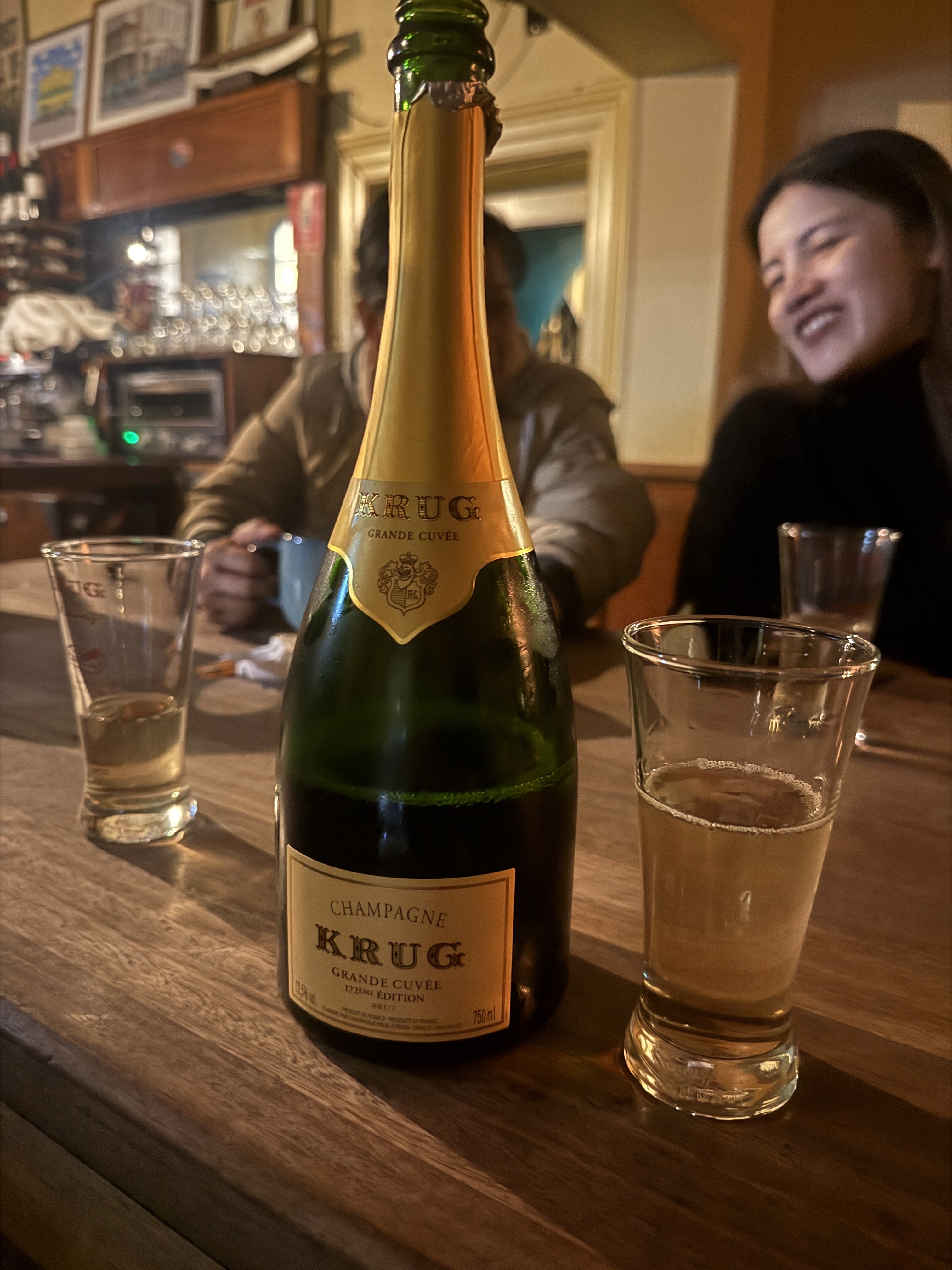
After the exam, we gathered at the Exeter for the (so I learned) traditional glass of Krug after—and many of us, myself included, were asking the same question: Why do I do this?
For me, that question was quickly followed by others: Will I be spending another $10,000 to repeat the year? Will I wait two years and try again if I’m not invited back? And ultimately, it all circles back to the bigger question: Why do I want to become an MW in the first place?
For now, I’ve stopped trying to answer those questions. I’ll decide when the day comes and I know the result—hoping that at least one of them will become obsolete.
Leave a Reply